
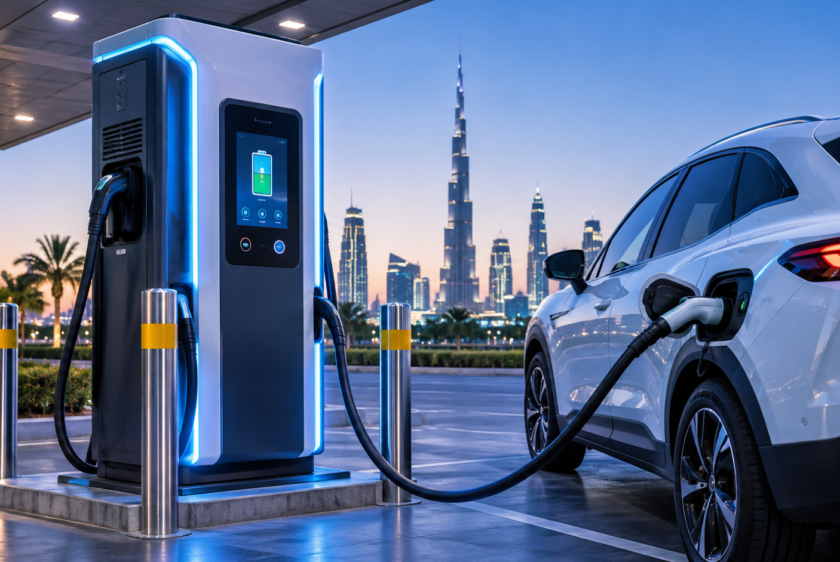
The growing adoption of electric vehicles across the United Arab Emirates is creating an increasing demand for reliable, scalable, and intelligent charging networks. EV charging infrastructure consulting plays a crucial role in helping businesses, property developers, fleet operators, commercial facilities, and Charge Point Operators establish efficient charging systems that meet current requirements and support future expansion. From site assessment and electrical planning to charger selection, software integration, and long-term maintenance, professional EV charging infrastructure consulting helps organizations make informed decisions about their investments. As the EV charging infrastructure UAE market continues to evolve, combining strategic planning with effective EV charging station management is essential for creating dependable charging networks that support sustainable mobility and business growth.
1. What Is EV Charging Infrastructure Consulting?
EV charging infrastructure consulting is a professional service that helps businesses plan, design, evaluate, and implement electric vehicle charging infrastructure according to their operational requirements. It involves understanding a site’s electrical capacity, expected charging demand, parking arrangements, charger specifications, connectivity requirements, and future expansion possibilities.
For organizations in Dubai, Abu Dhabi, Sharjah, and other Emirates, EV charging infrastructure consulting provides a structured approach to developing charging facilities. Instead of selecting charging equipment without a complete assessment, businesses can evaluate their requirements and choose solutions that are technically suitable, commercially practical, and scalable.
The EV charging infrastructure UAE market includes different applications, such as residential charging, workplace charging, commercial parking facilities, public charging hubs, fuel stations, and fleet depots. Each environment requires a different approach to infrastructure planning and EV charging station management.
A well-planned consulting process can help businesses identify potential technical challenges before installation begins. It can also support better coordination between property owners, electrical contractors, charging equipment suppliers, software providers, and facility management teams.
Key aspects of EV charging infrastructure consulting include:
- Site assessment: Evaluating parking spaces, electrical rooms, cable routes, charger locations, and installation conditions.
- Electrical capacity evaluation: Understanding available power and identifying potential upgrades or load-management requirements.
- Charger selection: Recommending suitable AC or DC charging equipment based on vehicle usage and charging demand.
- Infrastructure design: Planning electrical distribution, protection systems, connectivity, and charging layouts.
- Software integration: Evaluating compatible charging management platforms and OCPP connectivity.
- Future expansion planning: Preparing the infrastructure for additional chargers as demand increases.
- Operational planning: Establishing suitable procedures for EV charging station management, maintenance, and performance monitoring.
By addressing these requirements before implementation, EV charging infrastructure consulting can help businesses reduce planning uncertainty and develop charging systems that align with their long-term objectives.
2. Why EV Charging Infrastructure Consulting Is Important in the UAE
The UAE is developing its electric mobility ecosystem through the adoption of electric vehicles, smart technologies, and sustainable transportation initiatives. As businesses increasingly consider EV charging facilities, infrastructure planning becomes an important part of commercial and operational decision-making.
The EV charging infrastructure UAE market presents opportunities for shopping malls, hotels, office buildings, residential communities, fuel stations, logistics companies, and public parking operators. However, installing charging stations without proper planning may result in insufficient electrical capacity, inefficient charger placement, unnecessary infrastructure expenses, or operational difficulties.
EV charging infrastructure consulting helps organizations understand the technical and practical requirements of their projects before committing to equipment procurement and installation.
For example, a workplace where employees park for several hours may benefit from AC charging stations. In contrast, a commercial facility with frequent vehicle turnover may require DC fast charging to support shorter charging sessions. A fleet depot may need a combination of charging capacities and a coordinated charging schedule.
The importance of EV charging infrastructure consulting can be understood through the following benefits:
- Improved infrastructure planning: Businesses can assess site conditions and electrical requirements before installation.
- Better charger utilization: Charger placement and capacity can be aligned with expected vehicle demand.
- Cost-conscious decisions: Early planning can help identify unnecessary equipment purchases and potential infrastructure upgrades.
- Operational efficiency: Appropriate software and management strategies can simplify charging operations.
- Scalable infrastructure: Charging networks can be designed to accommodate future expansion.
- Enhanced user experience: Drivers can benefit from accessible charging locations and appropriately selected equipment.
- Long-term reliability: Maintenance requirements and technical support can be considered during the planning stage.
Professional EV charging infrastructure consulting is especially valuable for organizations planning multiple charging points or operating across different locations. A coordinated strategy can help standardize equipment selection, installation procedures, monitoring practices, and maintenance requirements throughout the EV charging infrastructure UAE network.
3. EV Charging Station Management: Improving Charging Network Performance
Developing charging infrastructure is only the beginning of a successful EV charging project. Once charging stations become operational, businesses must monitor performance, coordinate maintenance, manage charging sessions, and ensure that the infrastructure continues to meet user requirements.
EV charging station management refers to the ongoing process of monitoring, operating, maintaining, and optimizing charging stations. It involves both physical infrastructure and digital management systems that help operators maintain visibility into charging operations.
For businesses managing multiple charging locations, centralized management can provide valuable operational insights. Compatible charging management software may allow operators to monitor station status, review charging activity, identify faults, and manage network configurations remotely.
EV charging station management can include the following activities:
- Real-time monitoring: Checking charger availability and operational status through compatible platforms.
- Fault management: Identifying reported errors and coordinating troubleshooting or repairs.
- Preventive maintenance: Scheduling inspections and servicing to reduce avoidable equipment issues.
- Charging-session monitoring: Reviewing charging activity and session information where supported.
- Energy management: Monitoring consumption and evaluating opportunities for more efficient energy use.
- User access management: Configuring access permissions and charging policies according to operational requirements.
- Performance reporting: Reviewing utilization, charging activity, and operational trends.
- Technical support: Coordinating assistance, spare parts, repairs, and maintenance activities.
EV charging station management becomes particularly important for Charge Point Operators and commercial facilities with several charging stations. Without centralized monitoring, identifying operational issues across multiple locations can become difficult and time-consuming.
Open Charge Point Protocol (OCPP) is another important component of modern charging infrastructure. OCPP enables communication between compatible charging stations and central management systems. Depending on the implementation, it can support remote monitoring, configuration, and other network-management functions.
Combining EV charging infrastructure consulting with effective EV charging station management allows businesses to consider operational requirements from the beginning of a project. This approach helps create a more organized and adaptable charging environment.
4. EV Charging Infrastructure Consulting for Different Business Applications
Every charging environment has unique requirements. The most suitable EV charging infrastructure UAE solution depends on the type of property, expected vehicle usage, available electrical capacity, charging duration, and business objectives.
Newmont Energy provides EV charging solutions for Charge Point Operators, gas stations, workplaces, commercial facilities, and residential applications. These different applications demonstrate why EV charging infrastructure consulting should be tailored to the intended operating environment.
Commercial Properties
Shopping malls, hotels, airports, and public parking facilities can use EV charging stations to support customers, visitors, and employees. Infrastructure planning should consider parking duration, vehicle turnover, accessibility, and expected charging demand.
Workplace Charging
Office buildings and corporate facilities may provide EV charging for employees and visitors. AC charging can be suitable where vehicles remain parked for extended periods. EV charging station management can help facility managers monitor usage and coordinate charging operations.
Fleet Charging
Logistics companies, transportation businesses, and fleet operators may require charging infrastructure that supports predictable vehicle schedules. Consulting can help assess charging capacity, parking arrangements, energy requirements, and operational planning.
Fuel Stations and Public Charging Hubs
Fuel stations and high-traffic locations may require DC fast chargers to support drivers who need shorter charging stops. EV charging infrastructure consulting can help evaluate site suitability, electrical capacity, charger placement, and operational requirements.
Charge Point Operators
Charge Point Operators need scalable charging networks that can support multiple locations and different charging requirements. OCPP-compatible systems, centralized monitoring, and organized EV charging station management can be important considerations when developing these networks.
Key consulting considerations for different applications include:
- Identifying the primary users of the charging facility.
- Estimating daily and peak charging demand.
- Evaluating AC and DC charger requirements.
- Reviewing electrical infrastructure and available power.
- Assessing parking layout and charger accessibility.
- Selecting compatible charging software.
- Planning maintenance and technical support.
- Establishing a strategy for future expansion.
A customized consulting approach helps businesses avoid a one-size-fits-all solution and supports more effective development of EV charging infrastructure UAE projects.
5. Key Steps in EV Charging Infrastructure Consulting and Implementation
A successful EV charging project requires a coordinated process that connects planning, design, installation, commissioning, and ongoing management. EV charging infrastructure consulting helps businesses understand the requirements at each stage and establish a clear implementation strategy.
The following steps provide a practical framework for developing charging infrastructure.
Step 1: Define Project Objectives
Determine whether the charging stations will serve employees, residents, customers, fleet vehicles, or public EV drivers. Establish the intended number of charging points, operating model, and expected usage.
Step 2: Conduct a Site Assessment
Evaluate the property, parking spaces, electrical room, cable routes, equipment placement, and installation conditions. Identify potential technical or physical limitations.
Step 3: Evaluate Electrical Capacity
Review the existing electrical supply and estimate the charging load. Determine whether additional electrical capacity, suitable load management, or infrastructure upgrades may be required.
Step 4: Select Appropriate Charging Equipment
Choose AC or DC chargers according to the intended application, vehicle compatibility, charging duration, power requirements, and expected utilization.
Step 5: Develop the Infrastructure Design
Prepare a suitable layout that considers charger locations, electrical distribution, protection systems, cable routing, connectivity, accessibility, and expansion possibilities.
Step 6: Coordinate Installation and Commissioning
Manage installation activities, equipment configuration, communication setup, testing, and commissioning. Verify that the installed infrastructure meets the project’s technical and operational requirements.
Step 7: Establish EV Charging Station Management Procedures
Define monitoring processes, maintenance schedules, fault reporting, technical support, and performance tracking. Where applicable, configure compatible charging management software and OCPP connectivity.
Step 8: Review Performance and Plan Expansion
Evaluate charging activity, station utilization, recurring issues, and future demand. Use operational information to determine whether additional charging points or infrastructure improvements are needed.
Important implementation considerations include:
- Applicable local authority requirements and approvals.
- Electrical safety and protection.
- Equipment compatibility.
- Network connectivity.
- Software integration.
- Installation quality.
- Maintenance accessibility.
- Operational documentation.
- Future infrastructure scalability.
The approval process may differ according to the emirate, property type, electrical account, and project scope. Businesses should verify the applicable requirements with the relevant authorities and qualified professionals before proceeding.
By following a structured approach, EV charging infrastructure consulting can help organizations coordinate project requirements and establish a practical foundation for long-term EV charging station management.
6. The Future of EV Charging Infrastructure UAE
The future of electric mobility in the UAE will depend on more than the availability of electric vehicles. Reliable charging infrastructure, suitable charging locations, connected management systems, and efficient operations will also play an important role in supporting EV adoption.
As charging demand evolves, businesses may need to expand existing networks, introduce additional charging capacities, improve software integration, and enhance operational monitoring. EV charging infrastructure consulting can help organizations evaluate these changes and make informed infrastructure decisions.
Smart charging technologies, compatible OCPP systems, centralized management platforms, and data-driven operational strategies are becoming increasingly relevant to modern charging networks. These technologies can help operators improve visibility and manage charging infrastructure more effectively, depending on their system capabilities.
Future-focused EV charging infrastructure UAE projects should consider:
- Scalable charging infrastructure for growing demand.
- Smart charging and energy-management capabilities.
- Compatible charging software and OCPP connectivity.
- Efficient EV charging station management.
- Preventive maintenance and technical support.
- Appropriate AC and DC charging solutions.
- Infrastructure planning for commercial and fleet applications.
- Operational performance monitoring.
- Long-term investment and expansion requirements.
Newmont Energy offers EV charging solutions for residential, workplace, commercial, gas-station, and Charge Point Operator applications, along with supporting services such as installation, commissioning, maintenance, spare-parts management, and technical assistance.
For businesses planning to establish or expand charging networks, EV charging infrastructure consulting provides a practical foundation for aligning technology, infrastructure, and operational objectives. Combining effective EV charging station management with appropriate charging equipment and long-term support can help organizations build dependable charging networks across the UAE.
Conclusion
EV charging infrastructure consulting is an important part of developing reliable, scalable, and efficient electric vehicle charging networks. From initial site assessment and electrical planning to charger selection, installation, software integration, and future expansion, a structured consulting approach helps businesses make informed decisions throughout the project lifecycle.
The growing EV charging infrastructure UAE market creates opportunities for commercial property owners, fleet operators, workplaces, fuel stations, and Charge Point Operators. However, successful implementation requires more than installing charging equipment. It also requires effective EV charging station management, suitable technology, operational planning, maintenance, and ongoing technical support.
By combining EV charging infrastructure consulting with professional implementation and structured management practices, businesses can develop charging networks that meet their current needs while remaining adaptable to future growth.
Newmont Energy provides EV charging solutions and supporting services for different applications across the UAE. Businesses looking to develop or expand their EV charging infrastructure can explore the available solutions at https://evcharger-uae.com/ and identify an approach that aligns with their project requirements, operational needs, and long-term objectives.