
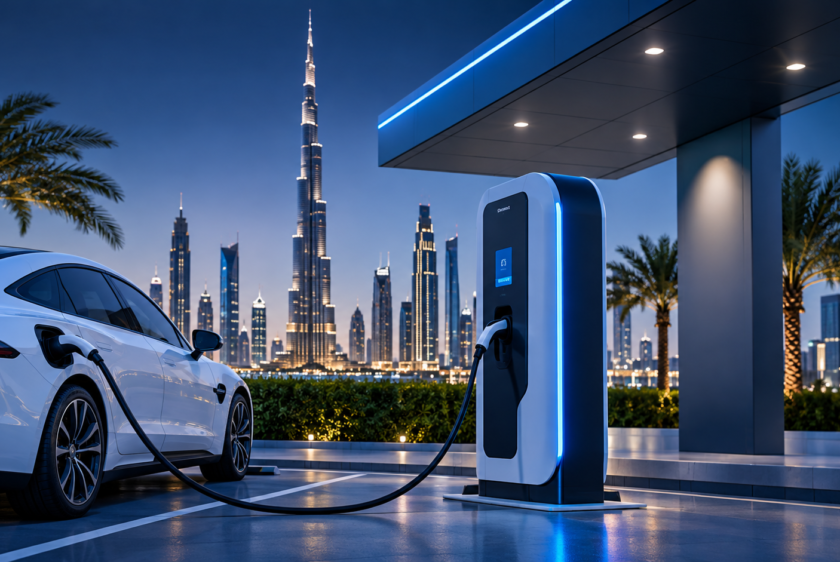
Dubai is rapidly advancing towards sustainable transportation, making EV charging infrastructure in Dubai an essential part of its evolving mobility ecosystem. As electric vehicle adoption continues to grow across the UAE, businesses, property developers, fleet operators, and commercial property owners are recognising the importance of reliable charging networks. Investing in EV charging infrastructure in Dubai, implementing advanced Commercial EV charging solutions, and maintaining efficient EV charging station management are becoming important steps towards supporting the future of electric mobility.
The development of a reliable EV charging network requires more than simply installing charging stations. It involves selecting suitable charging equipment, evaluating electrical infrastructure, planning installation, integrating smart charging technology, and ensuring continuous operational support. Businesses that invest in the right charging infrastructure can improve customer convenience, support sustainability objectives, and prepare their facilities for increasing demand for electric vehicles.
1. Understanding the Growth of EV Charging Infrastructure in Dubai
Dubai’s transition towards sustainable mobility is creating new opportunities for electric vehicle charging infrastructure. With growing interest in electric cars, commercial fleets, and environmentally responsible transportation, the demand for accessible and dependable charging facilities is increasing. EV charging infrastructure in Dubai plays an important role in supporting this transition by connecting residential communities, commercial properties, workplaces, public parking facilities, and transportation networks.
For businesses, establishing EV charging facilities is not just about providing an additional service. It is also a strategic investment that can improve property value, attract environmentally conscious customers, and support long-term operational development. A well-planned charging network ensures that electric vehicle owners have convenient access to charging facilities while helping businesses prepare for changing transportation requirements.
Developing effective infrastructure requires careful consideration of location, charging capacity, electrical requirements, equipment compatibility, and future expansion. Businesses should also consider the type of vehicles using their facilities and the expected charging frequency before selecting suitable charging equipment.
Important factors driving EV charging infrastructure development include:
-
Growing electric vehicle adoption: Increasing interest in electric vehicles is creating demand for accessible charging stations across Dubai and the wider UAE.
-
Sustainable transportation: EV charging facilities support efforts to reduce dependence on conventional fuel-powered transportation.
-
Commercial opportunities: Shopping centres, hotels, offices, and parking operators can improve customer experiences by providing convenient charging facilities.
-
Fleet electrification: Logistics companies and commercial fleet operators require dependable charging networks to support daily transportation operations.
-
Smart charging technology: Advanced charging systems help businesses monitor charging activity, manage energy consumption, and improve operational efficiency.
-
Future scalability: Infrastructure should be designed to accommodate additional charging stations as electric vehicle adoption increases.
2. Commercial EV Charging Solutions for Businesses in Dubai
Commercial EV charging solutions are becoming increasingly important for businesses that want to accommodate electric vehicle users and strengthen their sustainability initiatives. From shopping malls and hotels to office buildings, airports, residential developments, and logistics facilities, commercial charging stations provide practical charging opportunities for different types of users.
Businesses should select charging solutions based on their operational requirements, available electrical capacity, parking arrangements, and expected vehicle usage. For example, workplaces may benefit from AC charging stations that allow employees to charge their vehicles during working hours. Shopping centres and highway facilities may require DC fast chargers that provide faster charging opportunities for customers and travellers.
Newmont Energy provides EV charging solutions for commercial properties, charging network operators, workplaces, gas stations, and other business environments. Its portfolio includes AC and DC charging equipment, mobile EV charging solutions, and supporting technologies designed to accommodate different charging requirements.
Popular applications of Commercial EV charging solutions include:
-
Shopping malls and retail centres: Installing EV chargers allows customers to charge their vehicles while shopping, creating additional convenience and improving the overall customer experience.
-
Hotels and hospitality facilities: EV charging stations can attract electric vehicle owners looking for convenient accommodation and charging facilities.
-
Corporate offices: Workplace charging solutions support employees who use electric vehicles and help businesses demonstrate their commitment to sustainable operations.
-
Commercial parking facilities: Property owners can introduce charging services to improve parking facilities and create additional business opportunities.
-
Logistics and fleet operations: Dedicated charging infrastructure helps fleet operators support electric delivery vehicles and commercial transportation requirements.
-
Petrol stations: Integrating DC fast chargers can help traditional fuel stations develop into modern energy and mobility hubs.
Selecting the right equipment is equally important. AC chargers are generally suitable for locations where vehicles remain parked for longer periods, while DC fast chargers are appropriate for locations requiring faster vehicle turnaround. Businesses can also explore mobile EV charging solutions when permanent grid connections are unavailable or temporary charging support is required.
3. EV Charging Station Management: Improving Efficiency and Reliability
Installing charging stations is only the beginning of developing a successful electric vehicle charging network. Businesses also need effective EV charging station management to ensure that charging equipment operates reliably, customers receive a consistent experience, and energy resources are used efficiently.
Modern EV charging station management systems allow operators to monitor charging infrastructure, track station performance, manage charging sessions, and identify operational issues. These capabilities are particularly valuable for businesses operating multiple charging locations across Dubai and other Emirates.
Newmont Energy supports smart charging integration through OCPP 1.6 communication protocol compatibility. This technology helps charging operators connect compatible charging stations with central management platforms, supporting communication between charging equipment and network management systems.
Effective EV charging station management also helps businesses understand how their charging facilities are being used. By monitoring operational information, operators can identify frequently used charging stations, evaluate performance, and make informed decisions about infrastructure expansion.
Key features of effective EV charging station management include:
-
Real-time monitoring: Monitor charging station status and identify equipment availability or operational issues.
-
Charging session management: Track charging activities and maintain better visibility over charging operations.
-
Remote management: Manage compatible charging equipment through connected software platforms.
-
Performance monitoring: Evaluate station utilisation, charging activity, and operational efficiency.
-
Preventive maintenance: Identify potential equipment problems before they develop into major operational disruptions.
-
Network scalability: Support the expansion and management of multiple charging stations as business requirements increase.
By implementing effective EV charging station management, businesses can improve charging network reliability while providing a more convenient experience for electric vehicle users.
4. Choosing the Right EV Charging Technology for Dubai’s Commercial Requirements
Selecting suitable charging equipment is one of the most important decisions when developing EV charging infrastructure in Dubai. Different businesses have different charging requirements, and choosing the right technology can significantly influence charging performance, operational costs, and customer satisfaction.
AC and DC charging technologies serve different purposes. AC charging is generally suitable for locations where vehicles remain parked for extended periods, whereas DC fast charging is designed for applications where vehicles need to recharge more quickly.
Commercial property developers, fleet operators, charging network providers, and hospitality businesses should evaluate their operational needs before investing in charging equipment.
Newmont Energy offers different charging products, including MaxiCharger AC Wallbox, MaxiCharger AC Ultra, MaxiCharger DC Fast, MaxiCharger DC Hipower, and MaxiCharger DC V2X. These product options support different installation environments and charging requirements.
Important charging technologies and their applications include:
-
AC EV chargers: Suitable for residential communities, workplaces, commercial parking facilities, and locations where vehicles remain parked for several hours.
-
DC fast chargers: Appropriate for commercial charging hubs, petrol stations, public parking facilities, and locations requiring faster charging.
-
High-power DC chargers: Designed for applications with greater charging capacity requirements and higher vehicle turnover.
-
Smart charging systems: Help operators monitor charging activity and coordinate charging operations through compatible management platforms.
-
Mobile EV charging solutions: Provide flexible charging support for temporary locations, events, roadside assistance, and areas with limited grid access.
-
OCPP-compatible charging equipment: Supports communication between compatible charging stations and centralised charging management platforms.
Businesses should also evaluate connector compatibility, available electrical capacity, installation conditions, equipment protection, and future charging demand. Selecting appropriate technology from the beginning helps establish more reliable and scalable EV charging infrastructure in Dubai.
5. The Importance of Maintenance and Infrastructure Management
A successful EV charging network requires continuous attention to equipment performance, safety, and maintenance. Even advanced charging stations need regular inspections and technical support to maintain consistent operation.
For commercial properties and charging network operators, unexpected equipment downtime can affect customer satisfaction and business operations. This makes maintenance an essential part of EV charging station management.
Businesses investing in Commercial EV charging solutions should consider maintenance requirements before installing their charging infrastructure. A structured maintenance approach helps operators maintain equipment reliability, identify technical issues, and extend the operational life of charging stations.
Newmont Energy highlights ongoing maintenance, spare parts management, preventive maintenance, technical training, warranty extensions, and on-site commissioning as part of its supporting services.
Important maintenance practices for EV charging infrastructure include:
-
Regular equipment inspections: Check charging stations, connectors, cables, and electrical components to identify visible damage or performance issues.
-
Preventive maintenance: Schedule routine servicing to reduce the possibility of unexpected equipment failures.
-
Spare parts management: Maintain access to suitable replacement components to support faster maintenance and repairs.
-
Technical support: Ensure that qualified professionals can assist with troubleshooting and equipment-related concerns.
-
Software monitoring: Keep compatible charging management systems updated and monitor operational performance.
-
Safety assessments: Review electrical connections, protective systems, and installation conditions to support safe charging operations.
-
Performance evaluation: Analyse charging station utilisation and operational information to identify opportunities for improvement.
For businesses operating several charging locations, a planned maintenance strategy is particularly important. Combining technical support with effective EV charging station management helps maintain network availability and operational consistency.
6. The Future of EV Charging Infrastructure in Dubai: Building Smarter Commercial Networks
The future of EV charging infrastructure in Dubai will depend on the development of intelligent, accessible, and scalable charging networks. As electric mobility becomes increasingly integrated into everyday transportation, businesses will need charging infrastructure that can adapt to changing customer expectations and operational requirements.
Commercial property developers, hotels, shopping centres, fleet operators, and charging network providers have opportunities to participate in this growing ecosystem. However, successful infrastructure development requires more than purchasing charging equipment. It involves understanding energy requirements, selecting appropriate technology, planning installations, and establishing effective management processes.
Commercial EV charging solutions will continue to play an important role in supporting businesses that want to accommodate electric vehicle users. Meanwhile, advanced EV charging station management technologies will help operators improve visibility, monitor charging performance, and manage expanding networks.
Businesses should consider several important developments when planning future charging infrastructure:
-
Smart charging integration: Connected charging systems can help businesses monitor charging operations and manage compatible equipment more efficiently.
-
Energy storage integration: Battery energy storage can support charging applications where grid capacity is limited or additional energy flexibility is required.
-
Mobile charging technology: Mobile EV charging solutions provide flexible charging support for temporary locations and situations where permanent infrastructure is not immediately available.
-
Fleet electrification: Commercial transportation operators will increasingly need dependable charging infrastructure to support electric vehicle fleets.
-
Scalable charging networks: Infrastructure planning should allow businesses to introduce additional charging stations as demand grows.
-
Customer-focused charging facilities: Convenient locations, dependable equipment, and efficient charging experiences can help attract and retain EV users.
Newmont Energy aims to support this transition by providing EV charging products, mobile charging solutions, commercial charging infrastructure, and technical support across the UAE. Its solutions cater to different applications, including commercial parking, workplaces, gas stations, charging network operators, and other business environments.
For organisations planning to invest in EV charging infrastructure in Dubai, working with an experienced charging solutions provider can help simplify equipment selection, infrastructure planning, installation coordination, and ongoing operational support.
Conclusion: Building a Reliable EV Charging Network with Newmont Energy
The development of EV charging infrastructure in Dubai represents an important opportunity for businesses preparing for the future of electric mobility. As demand for electric vehicles and accessible charging facilities grows, organisations need dependable infrastructure that supports different charging requirements and long-term operational goals.
Investing in suitable Commercial EV charging solutions allows businesses to improve customer convenience, support fleet electrification, and strengthen their sustainability initiatives. At the same time, implementing effective EV charging station management helps maintain equipment performance, monitor charging activities, and support reliable network operations.
Newmont Energy provides EV charging solutions designed for commercial properties, workplaces, charging network operators, fleet operations, and other applications across the UAE. With its range of AC and DC chargers, mobile charging technology, OCPP-compatible systems, and supporting maintenance services, the company helps businesses explore practical solutions for their electric vehicle charging requirements.
Whether you are developing a new charging facility, upgrading an existing installation, or planning a commercial charging network, choosing the right infrastructure and technical support is essential.
Looking to develop EV charging infrastructure in Dubai? Explore the charging products and solutions offered by Newmont Energy and contact its team to discuss your commercial EV charging requirements.