
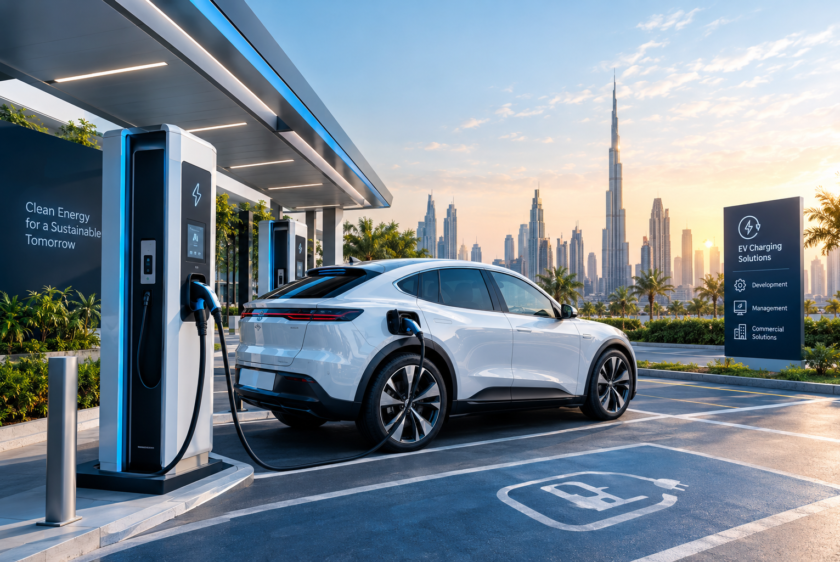
EV charging station development is becoming an essential part of the UAE’s transition towards sustainable transportation, smarter mobility, and energy-efficient business operations. As electric vehicle adoption grows across Dubai, Abu Dhabi, Sharjah, and other Emirates, businesses need reliable charging infrastructure that supports drivers, improves operational efficiency, and creates long-term commercial opportunities. From selecting suitable charging equipment to installation, software integration, and ongoing maintenance, successful EV charging station development requires a comprehensive approach. Newmont Energy, through its EV charging solutions in the UAE, supports businesses, fleet operators, property developers, and charging network operators with flexible technologies designed for different charging requirements. Combined with professional EV charging station management and scalable Commercial EV charging solutions, well-planned infrastructure can help businesses prepare for the future of electric mobility.
1. Understanding EV Charging Station Development in the UAE
EV charging station development involves planning, designing, installing, and commissioning charging infrastructure for electric vehicles. It is more than purchasing a charger and connecting it to a power supply. A successful project requires careful evaluation of the location, electrical capacity, expected vehicle traffic, charging requirements, equipment compatibility, and long-term operational needs.
The UAE provides a growing opportunity for EV charging infrastructure because electric mobility is becoming increasingly relevant to residential communities, commercial properties, hospitality businesses, logistics companies, and public transportation. Businesses that invest in the right infrastructure can improve customer convenience while positioning their properties and operations for changing mobility requirements.
EV charging station development should begin with a clear understanding of the intended users. A hotel may require chargers that serve guests during extended stays, whereas a fleet operator may need high-power charging to reduce vehicle downtime. Shopping centres and commercial parking facilities may benefit from a combination of charging speeds to accommodate different parking durations.
Newmont Energy provides charging solutions for commercial parking, workplaces, charging network operators, fleets, and other applications. Its portfolio also includes mobile EV charging technology for locations where permanent grid access is limited or rapid deployment is required.
Important considerations for EV charging station development include:
- Site assessment: Evaluate parking capacity, accessibility, electrical infrastructure, vehicle movement, and available installation space.
- Charging equipment: Determine whether AC chargers, DC fast chargers, or a combination of both best meets operational requirements.
- Electrical capacity: Assess existing loads and identify whether upgrades, load balancing, or additional electrical infrastructure may be required.
- Vehicle compatibility: Select chargers and connectors that are appropriate for the vehicles expected to use the station.
- Future expansion: Plan for additional chargers and increased demand without requiring unnecessary reconstruction.
- Regulatory requirements: Confirm the applicable approvals, electrical safety standards, and installation requirements with the relevant UAE authorities.
A structured development process reduces avoidable delays and helps businesses make informed investment decisions. When technical planning and commercial objectives are considered together, EV charging station development can become a practical investment in future mobility rather than an isolated infrastructure expense.
2. The Importance of Professional EV Charging Station Management
Installing charging equipment is only the beginning of an effective charging operation. EV charging station management ensures that charging assets remain operational, accessible, safe, and efficient throughout their service life. Without appropriate management, businesses may experience equipment downtime, inconsistent charging experiences, maintenance difficulties, or limited visibility into energy consumption.
Professional EV charging station management combines technical maintenance, charging software, operational monitoring, fault resolution, and performance evaluation. These functions help operators understand how their infrastructure is being used and identify opportunities to improve service quality.
Smart charging software can provide information about charging sessions, charger availability, energy consumption, and equipment status. Depending on the platform and configuration, operators may also be able to manage user access, establish charging tariffs, generate reports, and integrate billing functions.
Newmont Energy highlights ongoing maintenance, preventive maintenance, spare parts management, technical training, on-site commissioning, and partner support among its charging-related services. These capabilities are important for businesses seeking dependable charging operations rather than a one-time installation.
Key elements of effective EV charging station management include:
- Real-time monitoring: Track charger status and identify faults or unexpected interruptions where supported by the management platform.
- Preventive maintenance: Schedule inspections and servicing to identify potential equipment problems before they cause significant disruption.
- Remote management: Use compatible software to monitor charging assets and manage selected functions without visiting every site.
- Energy management: Review charging demand and electricity consumption to identify opportunities for better load distribution.
- Technical support: Establish clear processes for troubleshooting, repairs, spare parts, and equipment replacement.
- Performance reporting: Evaluate charging sessions, utilisation, downtime, and other relevant indicators to guide operational decisions.
Another important consideration is software interoperability. Open Charge Point Protocol (OCPP), where supported by the charger and management platform, can help connect compatible charging equipment with a charge point management system. Newmont Energy lists OCPP 1.6 support for its mobile charging solution, making protocol compatibility an important factor to evaluate for relevant projects.
Effective EV charging station management improves operational visibility and helps businesses deliver a more consistent charging experience. It also allows infrastructure owners to make future investment decisions using operational data instead of relying entirely on assumptions.
3. Commercial EV Charging Solutions for Businesses and Property Developers
Commercial EV charging solutions enable businesses to integrate electric vehicle charging into their existing facilities or develop dedicated charging locations. These solutions can support customer services, employee mobility, fleet electrification, and new business opportunities.
Different commercial environments require different charging strategies. A retail centre may prioritise customer convenience and parking turnover, while an office building may focus on employee charging throughout the working day. Hotels can provide charging as an additional guest amenity, and logistics operators may require charging infrastructure that supports predictable fleet schedules.
Newmont Energy offers charging solutions for commercial parking, workplaces, charging network operators, and gas stations. Its portfolio includes AC wallbox equipment and DC fast-charging options, allowing businesses to evaluate different approaches based on their operational needs.
Commercial EV charging solutions should be selected according to actual demand rather than charger power alone. Higher-power equipment may be appropriate for high-turnover locations, but it can also require more substantial electrical capacity and investment. AC charging may be sufficient for destinations where vehicles remain parked for several hours.
Commercial EV charging solutions can benefit a range of business sectors:
- Shopping malls and retail centres: Offer charging facilities that improve convenience for visitors and support longer customer visits.
- Hotels and hospitality properties: Provide guests with access to charging while they stay, dine, or use on-site facilities.
- Office buildings: Support employee charging and help commercial properties adapt to changing workplace mobility needs.
- Fleet and logistics operators: Develop charging plans around vehicle routes, operating schedules, and daily energy requirements.
- Fuel stations: Add EV charging facilities to existing transport locations and explore opportunities to serve electric vehicle drivers.
- Property developers: Incorporate charging infrastructure into new commercial projects and assess the requirements of future tenants.
- Charging network operators: Deploy connected charging assets that can be monitored and managed through compatible software.
For commercial property owners, EV charging can also contribute to a broader sustainability strategy. However, the business case should account for equipment costs, installation, electricity, maintenance, software, and the expected utilisation of the site. Revenue models may include paid charging, subscription arrangements, employee benefits, or charging bundled with other services, depending on the business model and applicable requirements.
By aligning infrastructure with customer needs, Commercial EV charging solutions can support operational efficiency while helping businesses prepare for the increasing relevance of electric mobility in the UAE.
4. Technology, Smart Charging, and Flexible Infrastructure
Modern EV charging station development increasingly depends on connected equipment, intelligent software, and infrastructure that can adapt to different operating conditions. Selecting the appropriate technology helps ensure that a charging project can accommodate current demand while remaining suitable for future expansion.
AC chargers are commonly used where vehicles remain parked for extended periods. DC fast chargers are designed for applications that require higher charging power and shorter charging stops, subject to the vehicle’s charging capabilities and battery conditions. A well-planned site may use different charger types to accommodate a wider range of vehicles and charging requirements.
Smart charging systems can improve how available electrical capacity is distributed among charging points. Depending on the equipment and software, dynamic load management can help coordinate charging demand and reduce the risk of exceeding configured electrical limits. The actual benefits depend on the site’s electrical design, charger capabilities, and control system.
Mobile charging provides another option for particular use cases. Newmont Energy describes a mobile EV charging trailer with 210 kWh of energy storage and DC fast charging of up to 180 kW. The solution is intended for applications such as events, roadside assistance, fleet operations, and sites where permanent grid access is limited. Actual charging performance depends on operating conditions, vehicle compatibility, and available stored energy.
Technology considerations for EV charging station development include:
- AC and DC charging: Match charging speed and equipment type to vehicle dwell time and operational requirements.
- Smart charging software: Evaluate monitoring, access management, reporting, and billing capabilities.
- OCPP compatibility: Check supported protocol versions and compatibility between chargers and the intended management platform.
- Energy storage: Consider battery-supported or mobile charging where it offers a practical solution to site limitations.
- Environmental protection: Select equipment appropriate for outdoor conditions, dust exposure, humidity, and high ambient temperatures in the UAE.
- Scalable design: Consider cable routes, switchgear, distribution capacity, parking layouts, and software requirements for future expansion.
Technology selection should always be based on a complete site assessment. The most expensive or powerful charger is not necessarily the best option for every location. A carefully designed system balances performance, safety, reliability, cost, and ease of operation.
When combined with effective EV charging station management, connected charging infrastructure can provide the operational information needed to improve utilisation, identify recurring issues, and plan maintenance more efficiently.
5. Planning, Installation, Safety, and Long-Term Maintenance
A successful EV charging project requires coordination between property owners, electrical contractors, equipment suppliers, software providers, and other relevant stakeholders. Clear planning helps establish realistic budgets, define responsibilities, and identify technical or regulatory challenges before installation begins.
The process generally starts with a site survey and assessment of electrical capacity. The project team then determines the appropriate charger specifications, installation locations, cable routes, protection systems, and connectivity requirements. Applicable approvals must be identified early, particularly for projects involving commercial buildings, public charging, electrical upgrades, or shared parking facilities.
Commissioning is equally important. Before a charging station enters regular service, the installation should undergo the appropriate electrical checks, equipment configuration, communication tests, and functional testing. Operators should also understand how to use the management system and respond to faults.
In the UAE, requirements may vary by emirate, project type, property, and utility provider. Businesses should confirm current requirements with the relevant authorities and qualified professionals rather than assume that a single approval process applies everywhere.
A practical implementation process includes the following steps:
- Initial consultation: Establish the project objectives, intended users, estimated demand, and commercial expectations.
- Site and load assessment: Examine the available electrical capacity, parking layout, installation conditions, and possible infrastructure upgrades.
- Equipment selection: Choose compatible AC or DC chargers, connectors, communications features, and mounting arrangements.
- Design and approvals: Prepare the required technical plans and obtain applicable permissions before carrying out regulated work.
- Installation and configuration: Complete electrical work, mount equipment, configure connectivity, and integrate the management platform where required.
- Testing and handover: Verify the installation, document the system configuration, and provide operating guidance.
- Maintenance planning: Establish inspection schedules, technical support arrangements, spare parts availability, and fault-response procedures.
Long-term maintenance should not be treated as an optional extra. Charging equipment operates in demanding environments, and outdoor installations in the UAE may experience high temperatures, dust, and humidity. Appropriate equipment selection, installation practices, inspections, and servicing can help maintain reliability.
Professional EV charging station management also supports better lifecycle planning. By reviewing equipment condition, downtime, utilisation, and repair history, operators can identify recurring problems and determine when maintenance, upgrades, or replacements may be necessary.
A structured approach to installation and maintenance helps businesses protect their infrastructure investment and provide a more dependable charging experience.
6. The Future of EV Charging Station Development in the UAE
The future of EV charging station development will depend on how effectively infrastructure providers respond to evolving vehicle technology, charging demand, sustainability objectives, and business requirements. As more organisations consider electric fleets and charging facilities, the ability to deploy reliable and scalable systems will become increasingly important.
Businesses should plan infrastructure around realistic demand forecasts while allowing room for future growth. Installing more chargers than a site can economically support may lead to low utilisation, whereas insufficient capacity can create congestion and limit the usefulness of the facility. A phased development strategy can help balance initial investment with future requirements.
EV charging station management will remain a key part of this process. Operators will need to understand how charging assets perform, maintain equipment, manage energy use, and provide support to users. Smart software and compatible connected equipment can help make these responsibilities easier to coordinate.
Commercial EV charging solutions can also become part of wider property and mobility strategies. Retail destinations may integrate charging with customer parking, employers may incorporate it into workplace facilities, and fleet operators may coordinate charging with vehicle scheduling. Mobile charging may provide additional flexibility for temporary events or selected locations where permanent infrastructure is not immediately practical.
Businesses preparing for the next stage of electric mobility should focus on:
- Demand-led investment: Use vehicle numbers, parking duration, fleet schedules, and expected utilisation to guide infrastructure decisions.
- Flexible infrastructure: Choose systems that can accommodate additional chargers or changing operational requirements.
- Operational reliability: Establish maintenance procedures, monitoring arrangements, and clear support responsibilities.
- Commercial planning: Evaluate installation costs, operating expenses, electricity, software, and potential revenue models.
- Sustainability objectives: Assess how charging infrastructure supports broader organisational energy and transport goals.
- Experienced project partners: Work with qualified specialists who can coordinate equipment selection, installation, commissioning, and ongoing support.
Newmont Energy provides EV charging solutions for businesses and infrastructure partners, including mobile charging technology, commercial charging applications, and maintenance-related services. Businesses considering a new project can explore its offerings and discuss the charging requirements of their specific locations through the official website: https://evcharger-uae.com/.
Ultimately, successful EV charging station development requires more than installing charging hardware. It combines sound planning, suitable technology, reliable installation, effective EV charging station management, and commercially appropriate Commercial EV charging solutions. By bringing these elements together, businesses across the UAE can develop charging infrastructure that serves current needs while remaining adaptable to future electric mobility opportunities.