
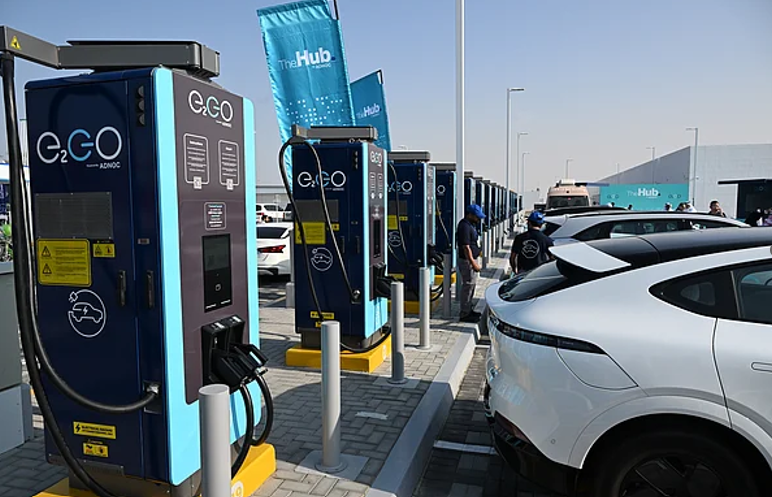
The UAE EV infrastructure is widely recognized as one of the most advanced in the Middle East and among the fastest-growing globally. With strong government policies, widespread charging networks, and growing EV adoption, the United Arab Emirates has positioned itself as a regional leader in electric mobility.
Driven by national initiatives like Net Zero 2050 and smart city strategies in Dubai and Abu Dhabi, the country continues to invest heavily in sustainable transport. As a result, EV ownership in the UAE is becoming more practical, affordable, and convenient each year.
One of the biggest reasons the UAE stands out is its rapidly expanding EV charging network. Charging stations are available across:
• Dubai
• Abu Dhabi
• Sharjah
• Northern Emirates
• Major highways
Drivers can find charging points in malls, petrol stations, offices, residential communities, hotels, and airports. Both AC chargers (slow charging) and DC fast chargers are widely available, with ultra-fast chargers being installed along key routes.
This infrastructure allows EV drivers to travel comfortably between Dubai and Abu Dhabi or across emirates without worrying about range limitations. The UAE’s highway charging corridors are among the most reliable in the region.
Government Support and EV Incentives
Government support plays a major role in the growth of electric vehicles in the UAE. Authorities such as DEWA, RTA, and Abu Dhabi’s Department of Energy have introduced programs to accelerate EV adoption.
Key benefits that have encouraged EV growth include:
• Reduced vehicle registration fees
• Public charging support programs
• Priority or free parking in select zones
• EV-friendly policies for businesses
These incentives, combined with rising fuel costs and sustainability awareness, are pushing more residents and companies to switch to electric vehicles.
EV-Ready Buildings and Home Charging
Real estate developers in the UAE are increasingly building EV-ready residential and commercial properties. Many apartments, villas, and office buildings now include charging provisions or installed chargers.
Home charging remains the most convenient option for EV owners, and installation processes in Dubai and Abu Dhabi are streamlined through approved providers. This makes daily charging simple and reliable.
Smart Technology and Renewable Energy Integration
The UAE integrates smart technology into its EV ecosystem. Mobile apps allow drivers to locate chargers, monitor usage, and pay digitally. Smart grids help balance electricity demand and improve efficiency.
Additionally, the country’s major solar projects support clean energy production, meaning many EVs are powered by renewable electricity—enhancing the environmental impact of electric mobility.
Why the UAE Is a Global EV Leader
Compared to many countries, the UAE offers:
• Dense charging infrastructure
• Strong policy support
• Smart city integration
• Growing EV market demand
Luxury EV brands, commercial fleets, and government vehicles are increasingly electrified, reinforcing the country’s leadership in sustainable transport.
Conclusion
The UAE EV infrastructure continues to set benchmarks for the Middle East and beyond. With widespread charging stations, government incentives, renewable energy integration, and smart technology, the country has created an environment where electric vehicle ownership is both practical and future-ready.
As adoption grows and technology advances, the UAE is well positioned to remain a global hub for electric mobility and sustainable transportation.