
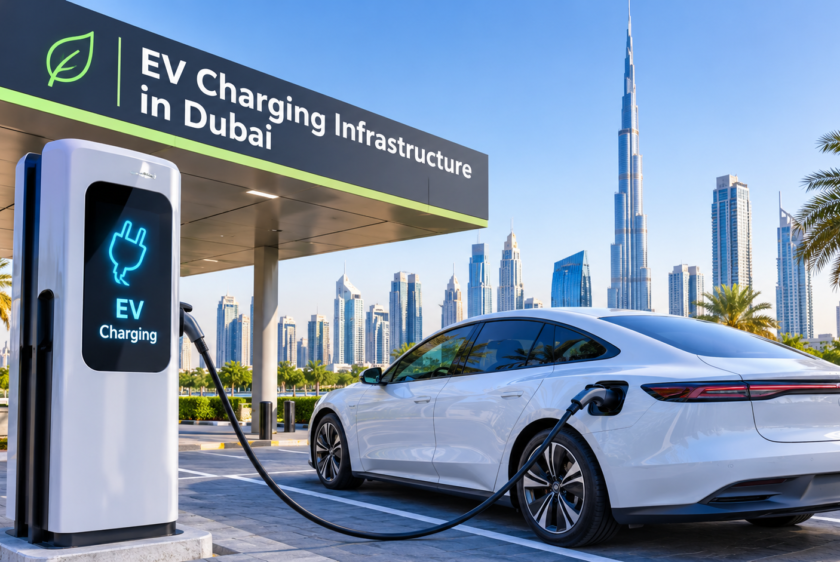
As electric vehicles (EVs) become increasingly popular across the United Arab Emirates, the demand for reliable charging infrastructure continues to grow. AC EV charger installation is an important step for homeowners, commercial property owners, fleet operators, and businesses looking to support convenient and efficient electric vehicle charging. Whether you are planning a home charging station, upgrading workplace facilities, or developing a commercial charging network, choosing the right installation approach is essential. Alongside AC EV charger installation, businesses may also require DC fast charger installation for high-demand locations and EV charging infrastructure consulting to plan, develop, and manage charging facilities effectively. With suitable equipment, professional installation, and proper infrastructure planning, property owners and businesses can prepare for the future of electric mobility in the UAE.
1. Understanding AC EV Charger Installation and Its Importance in the UAE
AC EV charger installation involves setting up an alternating current charging system that supplies electricity to an electric vehicle. Unlike DC fast chargers, which convert electricity into direct current before delivering it to the vehicle’s battery, AC chargers generally rely on the vehicle’s onboard charger to perform this conversion. This makes AC charging a practical option for locations where vehicles remain parked for several hours, including homes, offices, residential buildings, hotels, and employee parking facilities.
In the UAE, the suitability of AC EV charger installation depends on several factors, including the property’s electrical capacity, the vehicle’s charging capabilities, parking arrangements, and the expected frequency of use. A properly planned installation can provide a convenient charging experience while supporting the growing adoption of electric vehicles in Dubai, Abu Dhabi, Sharjah, and other emirates.
For property owners, AC charging can be particularly useful because it allows vehicles to recharge during ordinary parking periods. Rather than relying entirely on public charging stations, drivers can charge their vehicles at a location they regularly visit. Businesses can also introduce charging facilities to improve customer convenience and accommodate employees who drive electric vehicles.
However, successful installation requires more than selecting a charger and connecting it to a power supply. Electrical safety, load assessment, cable routing, protective equipment, and applicable approvals must all be considered before the system is commissioned.
Key considerations for AC EV charger installation include:
- Charging requirements: Identify the vehicle models, battery capacities, onboard charging limits, and daily driving distances of the intended users.
- Electrical capacity: Assess the property’s available electrical supply and determine whether additional electrical work or load management is necessary.
- Installation location: Choose a suitable parking space that provides convenient access to the charging connector and protects the equipment from accidental damage.
- Safety and compliance: Ensure that the installation follows applicable electrical standards and the relevant requirements of local authorities and property management.
- Future expansion: Consider whether additional charging points may be required as more residents, employees, or customers transition to electric vehicles.
- Professional assessment: Obtain technical advice before selecting equipment or beginning installation work.
For property owners who are unsure where to begin, EV Charger UAE provides a starting point for exploring EV charging solutions and understanding the different approaches available for electric vehicle charging projects.
2. Benefits of Professional AC EV Charger Installation for Homes and Businesses
Professional AC EV charger installation helps ensure that a charging system is appropriately selected, safely connected, and configured for its intended use. For homeowners, the main advantage is convenience. A dedicated home charger allows drivers to recharge their vehicles while sleeping or carrying out everyday activities, reducing the need to schedule trips around public charging availability.
Residential installations may be suitable for villas, townhouses, and other properties where the owner has an appropriate parking arrangement and access to a suitable electrical supply. Apartment installations can involve additional coordination with building management, electrical infrastructure assessments, and permission requirements.
For commercial properties, AC EV charger installation can support employees, visitors, customers, and company vehicles. Offices, hotels, shopping centres, residential developments, and other destinations where vehicles remain parked for extended periods can benefit from appropriately planned charging facilities.
Businesses should evaluate how charging stations will be used before determining their number, power ratings, and placement. A workplace where vehicles remain parked throughout the working day may have different charging requirements from a retail location where customers typically stay for shorter periods.
Another important benefit is the potential for smart charging. Compatible chargers and management systems can help operators monitor usage, manage charging sessions, and distribute available electrical capacity across multiple charging points. Depending on the equipment and software, these capabilities can also support access control, energy reporting, and billing.
Professional installation can also help reduce avoidable technical problems. Incorrect cable sizing, inadequate electrical protection, unsuitable equipment placement, or poor configuration can affect system reliability and safety. A structured installation process addresses these issues before the charging station becomes operational.
Major benefits of AC EV charger installation include:
- Convenient charging at home: Recharge an electric vehicle overnight or whenever the vehicle is parked.
- Workplace charging access: Give employees and visitors an additional reason to choose a property that supports electric mobility.
- Improved customer experience: Allow suitable commercial destinations to accommodate customers who drive electric vehicles.
- Controlled charging costs: Evaluate charging schedules and electricity tariffs to identify potential savings where applicable.
- Smart charging capabilities: Use compatible systems to monitor charging activity and manage electrical demand.
- Long-term flexibility: Plan an installation that can accommodate changing charging requirements as EV adoption increases.
- Better operational planning: Establish clear maintenance, monitoring, and troubleshooting procedures from the beginning.
The most effective installation is not necessarily the charger with the highest power rating. It is the system that matches the vehicle, property, budget, and expected usage pattern while maintaining appropriate safety standards.
3. AC EV Charger Installation vs. DC Fast Charger Installation: Choosing the Right Solution
Selecting between AC EV charger installation and DC fast charger installation is one of the most important decisions in an EV charging project. Both technologies support electric mobility, but they serve different purposes. Understanding their differences helps property owners and businesses choose equipment that suits their charging requirements.
AC chargers are generally appropriate for locations where vehicles remain parked for extended periods. Common applications include residential properties, offices, hotels, employee parking areas, and selected commercial facilities. Their suitability depends on the vehicle’s onboard charger, the available electrical supply, and the installed charger’s output.
DC fast charger installation is generally more appropriate for locations where vehicles need to recharge in a shorter period. These systems are commonly considered for public charging hubs, highway-related facilities, high-utilisation fleet operations, and commercial sites with frequent vehicle turnover. The actual charging speed depends on the charger’s output, the vehicle’s battery and charging limits, the battery’s state of charge, and other operating conditions.
Although DC fast charging can deliver power more quickly, it may require more substantial electrical infrastructure, higher-capacity connections, and additional investment. AC charging can be more suitable where vehicles have sufficient time to recharge and rapid turnaround is unnecessary.
The decision should therefore be based on operational requirements rather than charging speed alone. A commercial property may benefit from AC chargers for employees and visitors while requiring DC fast chargers for vehicles that must return to service quickly.
For example, an office building may have vehicles parked for six to eight hours during the working day. AC charging may be a practical option for this scenario. By contrast, a fleet operator whose vehicles complete multiple trips each day may need to evaluate DC fast charger installation to reduce charging downtime.
Some projects may require both technologies. A combination of AC and DC chargers can serve different user groups, provided that the electrical infrastructure, site layout, and charging management strategy are designed accordingly.
Important differences between AC and DC charging include:
- Charging speed: DC fast charging can deliver higher power, subject to vehicle compatibility and other operating conditions.
- Typical usage: AC charging is well suited to extended parking periods, while DC fast charging is useful when reducing downtime is a priority.
- Infrastructure requirements: DC installations may require greater electrical capacity and more extensive site preparation.
- Installation costs: Total costs depend on charger specifications, cabling, civil works, electrical upgrades, approvals, and other project requirements.
- Vehicle compatibility: The charger’s connector, power output, and charging capabilities must match the vehicle.
- Energy management: Both AC and DC installations can benefit from suitable monitoring and load management systems.
- Scalability: Future charging demand should be considered when planning either type of installation.
Before investing in either solution, businesses should assess current usage and expected future demand. This approach helps avoid unnecessary expenditure and supports a more practical charging strategy.
4. The Role of EV Charging Infrastructure Consulting in Successful Projects
EV charging infrastructure consulting helps businesses and property owners make informed decisions before committing to equipment purchases, electrical upgrades, and installation work. It involves evaluating a site’s technical requirements, operational objectives, charging demand, and potential future expansion.
For projects in the UAE, EV charging infrastructure consulting can be particularly valuable when several stakeholders are involved. Commercial developments, residential communities, hotels, fleet depots, and public charging facilities may require coordination between property owners, electrical contractors, equipment suppliers, building managers, and relevant authorities.
A structured consulting process begins with understanding the project’s objectives. A property owner may want to provide charging for residents, while a business may want to support its fleet or introduce charging facilities for customers. Each objective leads to different decisions about charger capacity, location, access, payment arrangements, and management systems.
The next step is a technical assessment. This typically involves reviewing the available electrical supply, parking layout, cable routes, installation conditions, and anticipated charging demand. The assessment can help identify whether existing infrastructure is sufficient or whether upgrades should be considered.
Consultants can also help compare AC EV charger installation with DC fast charger installation. By evaluating usage patterns and technical requirements, they can recommend a charging configuration that balances convenience, capacity, operating requirements, and budget.
For larger installations, planning should include charging management. A property with several charging points may need a system that monitors usage and distributes available electrical capacity appropriately. Smart charging can help prevent avoidable demand peaks, subject to the site’s electrical design and the capabilities of the selected equipment.
Businesses should also consider the long-term operating model. A charging station is not simply a piece of electrical equipment; it is an asset that may require monitoring, maintenance, software updates, user support, and performance reporting throughout its service life.
EV charging infrastructure consulting may cover the following activities:
- Initial project assessment: Define charging objectives, intended users, site conditions, and operational requirements.
- Electrical infrastructure review: Assess available capacity, distribution equipment, cable routes, and potential upgrade requirements.
- Charger selection: Compare suitable AC chargers and DC fast chargers based on technical specifications and intended use.
- Site planning: Determine practical charger locations, parking arrangements, cable access, and equipment protection.
- Budget planning: Evaluate equipment, installation, electrical works, approvals, software, and ongoing maintenance costs.
- Smart charging strategy: Assess the need for load management, remote monitoring, user access controls, and charging data.
- Compliance coordination: Identify relevant authority approvals and property permissions that must be confirmed before installation.
- Future expansion planning: Design the project with potential increases in charging demand in mind.
Effective EV charging infrastructure consulting helps decision-makers understand their options before construction or installation begins. It can also improve coordination between technical teams and business stakeholders, helping projects progress with clearer objectives and fewer avoidable planning issues.
For organisations exploring charging projects, the solutions presented on EV Charger UAE can help inform discussions about charging technology, operational requirements, and infrastructure needs.
5. AC EV Charger Installation Process, Safety, and Maintenance in the UAE
A successful AC EV charger installation follows a structured process that begins with technical assessment and continues through installation, testing, commissioning, and maintenance planning. The exact requirements depend on the property, charger specifications, electrical infrastructure, and applicable local regulations.
The first stage is a site assessment. A qualified professional reviews the parking location, electrical supply, proposed charger position, cable routes, and any physical obstacles. The assessment should also consider whether the charger will be installed indoors or outdoors and what environmental protection is appropriate.
Next, the charger must be selected based on vehicle compatibility and the property’s electrical capacity. A higher-rated charger is not automatically the best option. If the vehicle cannot accept the charger’s maximum output, or the property’s electrical supply is insufficient, the additional capacity may not provide a practical benefit.
Once the technical design is established, the project team should confirm applicable approvals and permissions. Requirements can differ depending on the emirate, property type, electrical connection, and nature of the project. In Dubai, for example, relevant DEWA requirements may apply. Building management approval may also be necessary for installations in shared residential or commercial properties.
Installation work should be completed by appropriately qualified professionals. This may involve mounting the charging unit, installing suitable cabling, providing required protective devices, connecting the system, and configuring any supported smart features.
Before the charger is handed over, the installation should be tested to verify safe operation. The user should receive guidance on charging procedures, connector handling, system indicators, and basic troubleshooting.
Maintenance is equally important. Regular inspections can help identify damage, loose connections, worn cables, or other issues before they lead to equipment failure. Smart chargers may also require software updates and periodic checks of their network connectivity.
Key stages of AC EV charger installation include:
- Site inspection: Assess the parking location, electrical capacity, and installation conditions.
- Charger selection: Choose equipment that matches the vehicle and the property’s electrical capabilities.
- Approvals and permissions: Confirm applicable authority requirements and property permissions before work begins.
- Electrical preparation: Complete the required wiring, cable routing, mounting, and protective arrangements.
- Charger installation: Secure the equipment and connect it according to the approved technical design.
- Testing and commissioning: Verify the installation, charging functionality, protective systems, and configuration.
- User handover: Explain safe operation, charging procedures, and available monitoring features.
- Preventive maintenance: Schedule appropriate inspections and address faults promptly.
For outdoor installations in the UAE, the design should account for high temperatures, dust, humidity, and potential exposure to water. Equipment should be selected and installed according to its environmental ratings and manufacturer instructions.
Safety should never be compromised to reduce installation costs. Improvised wiring, unsuitable extensions, and unverified electrical connections can create serious hazards. A professionally assessed and installed system provides a stronger foundation for dependable charging.
6. The Future of AC EV Charger Installation and Smart Charging Infrastructure in the UAE
The future of AC EV charger installation in the UAE will be influenced by electric vehicle adoption, property development, fleet electrification, and improvements in charging technology. As more homes and businesses consider electric vehicles, demand for convenient charging at residential and commercial destinations is likely to create additional infrastructure planning opportunities.
For homeowners, this means evaluating charging facilities as part of their long-term property and mobility requirements. For developers, it means considering how charging access can be incorporated into parking areas and electrical infrastructure. For businesses, it means assessing whether workplace charging, customer charging, or fleet charging can support their operational objectives.
Smart charging will play an important role in many of these projects. Compatible chargers and charging management systems can provide information about usage, help operators manage charging sessions, and distribute available power across multiple vehicles. Depending on the platform, operators may also be able to manage user access, review energy consumption, and monitor equipment remotely.
The Open Charge Point Protocol, commonly known as OCPP, can support communication between compatible charging stations and charging management software. However, supported versions, features, and integration requirements should be verified for the selected equipment and platform.
Charging infrastructure may also incorporate mobile charging solutions. These can be useful in certain scenarios where permanent charging infrastructure is unavailable, delayed, or insufficient for immediate requirements. Mobile systems are not a direct substitute for every permanent AC installation, but they can complement a broader charging strategy.
For example, the homepage of EV Charger UAE highlights mobile EV charging solutions, including a 210 kWh mobile charging trailer with DC charging capabilities of up to 180 kW. This illustrates how charging requirements can extend beyond conventional fixed charging stations, particularly when flexible or rapidly deployable charging is needed.
Businesses should therefore avoid treating AC EV charger installation, DC fast charger installation, and mobile charging as completely separate planning decisions. Depending on the location and operational model, a combination of charging technologies may offer a more appropriate solution.
A forward-looking charging strategy should account for current requirements while allowing for future growth. This may involve installing a suitable number of chargers initially, preparing electrical infrastructure for expansion, choosing compatible management software, and establishing a maintenance plan.
Future-focused considerations for EV charging infrastructure include:
- Scalable installation planning: Allow for additional chargers as the number of electric vehicles increases.
- Smart charging integration: Evaluate compatible monitoring, scheduling, and load management capabilities.
- Operational efficiency: Match charging technology to vehicle dwell time, usage patterns, and daily energy requirements.
- Mobile charging options: Consider flexible charging solutions for suitable temporary or specialised applications.
- Infrastructure resilience: Plan for equipment maintenance, technical support, and operational continuity.
- Sustainable mobility: Support the transition to electric transport through appropriately designed charging facilities.
- Long-term cost planning: Consider installation, electricity, maintenance, software, and potential upgrade expenses.
For businesses and property owners in the UAE, the best charging solution is one that combines safety, technical suitability, convenience, and long-term operational value. Professional planning can help ensure that each charging point serves a clear purpose and that the overall infrastructure remains practical as requirements evolve.
Conclusion
AC EV charger installation is an important consideration for homeowners, commercial property owners, developers, and businesses preparing for the continued growth of electric mobility in the UAE. By choosing compatible equipment, assessing electrical capacity, following applicable safety requirements, and arranging professional installation, property owners can establish convenient and dependable charging facilities.
At the same time, DC fast charger installation can support locations where faster vehicle turnaround is essential, while EV charging infrastructure consulting helps businesses evaluate technical requirements, budgets, charging management, and future expansion. Understanding how these solutions work together makes it easier to develop a charging strategy that suits the property and its users.
Whether the objective is to install a home charger, support workplace charging, develop a commercial facility, or evaluate more flexible charging options, careful planning is the foundation of a successful project. Explore the charging solutions available through EV Charger UAE to learn more about electric vehicle charging options and identify the approach that best suits your requirements.