
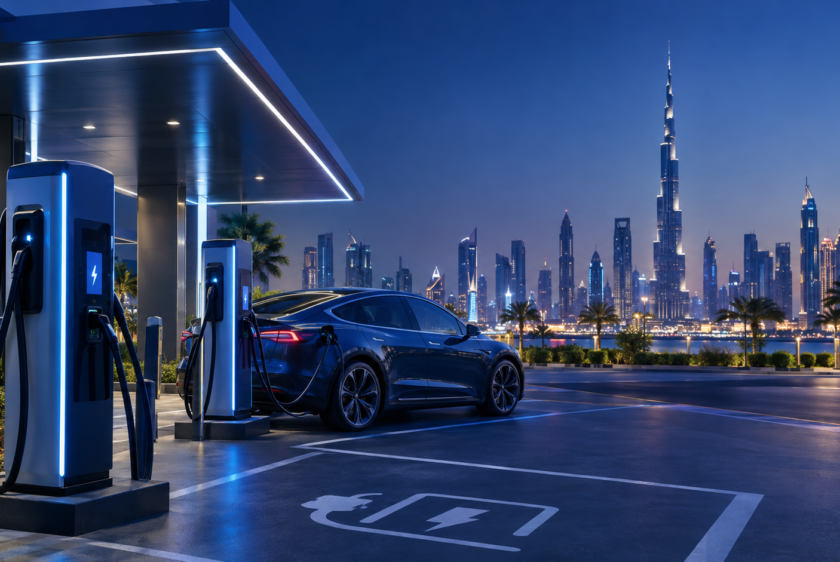
Dubai is rapidly evolving into a smarter and more sustainable mobility hub, making EV charging infrastructure in Dubai an increasingly important part of the city’s transportation ecosystem. As electric vehicle adoption grows, businesses, property developers, fleet operators, workplaces, fuel stations, and residential communities need dependable charging solutions that are convenient, scalable, and designed for local operating conditions. Effective EV charging infrastructure in Dubai requires more than installing charging equipment; it involves careful EV charging station development, appropriate technology selection, electrical planning, professional EV charger installation, software integration, ongoing maintenance, and a user-friendly charging experience. Newmont Energy provides charging solutions designed for homes, workplaces, commercial properties, gas stations, and Charge Point Operators across the UAE.
Why EV Charging Infrastructure in Dubai Is Becoming Essential
The growth of electric mobility is changing how people think about transportation, parking, energy consumption, and commercial infrastructure. For Dubai, a city known for rapid development and technology-driven infrastructure, accessible EV charging can play an important role in supporting the transition toward cleaner transportation. EV charging infrastructure in Dubai must serve different types of users, from residents charging overnight to commercial drivers requiring rapid charging during short stops.
For businesses, EV charging can also become part of a broader customer-experience and sustainability strategy. A shopping centre, hotel, office building, fuel station, or public parking facility can integrate charging facilities to make its property more attractive and useful to EV drivers. Newmont Energy specifically provides charging solutions for commercial parking, workplaces, gas stations, homes, and charging network operators.
A successful charging network needs to balance accessibility, charging speed, reliability, energy requirements, user demand, and future expansion.
Key considerations include:
- Location planning: Chargers should be positioned where EV users naturally spend time or need rapid access to energy.
- Charging capacity: The required power depends on vehicle demand, parking duration, charger type, and site characteristics.
- Scalability: Infrastructure should allow additional chargers to be introduced as EV adoption increases.
- Smart management: Connected charging systems can help operators monitor charging activity and manage their network.
- Reliability: Consistent availability is essential for creating confidence among EV drivers.
- Local conditions: Equipment and installation approaches should account for UAE heat, dust, humidity, and outdoor operating environments.
This makes professional EV charging infrastructure in Dubai planning a strategic infrastructure decision rather than simply an equipment purchase.
EV Charging Station Development: From Site Planning to Operation
Successful EV charging station development begins long before the charger is physically installed. Every location has different electrical capacity, parking requirements, traffic patterns, customer behaviour, and business objectives. A charging station designed for a residential building will have different requirements from a highway-oriented DC fast charging site or a high-traffic commercial parking facility.
The first step is understanding the purpose of the charging station. A workplace may prioritize longer-duration AC charging while employees are working, whereas a fuel station or high-traffic commercial location may require high-power DC charging to reduce vehicle turnaround time. Newmont Energy offers both AC and DC charging solutions for different applications, including workplace and commercial environments.
A comprehensive EV charging station development process can include:
- Site assessment: Evaluate parking layout, electrical infrastructure, accessibility, and expected charging demand.
- Load planning: Determine available electrical capacity and estimate the additional load created by the charging network.
- Charger selection: Select AC chargers, DC fast chargers, or a combination based on the intended application.
- Infrastructure design: Plan cabling, protection systems, mounting locations, signage, and equipment positioning.
- Network integration: Connect compatible chargers with backend software for monitoring and management.
- Installation and commissioning: Complete professional installation, testing, configuration, and operational checks.
- Maintenance planning: Establish preventive maintenance and technical support procedures to protect long-term performance.
For Charge Point Operators, the process can be even broader. Newmont Energy describes its CPO offering as an end-to-end approach covering hardware supply, network planning, site feasibility, installation, commissioning, backend integration, maintenance, and technical support.
By treating EV charging station development as a complete lifecycle rather than a one-time installation, businesses can build charging infrastructure that is better prepared for future demand.
EV Charger Installation in Dubai: What Businesses Need to Consider
Professional EV charger installation is one of the most important stages of building reliable EV charging infrastructure in Dubai. Even high-quality charging hardware can perform poorly if the electrical design, installation, configuration, or commissioning process is not handled correctly.
The installation process should begin with a technical assessment of the proposed location. This helps determine where chargers can be installed safely and how they can be connected to the available electrical infrastructure. For commercial and high-demand locations, engineers may also need to consider multiple simultaneous charging sessions and energy management.
Professional EV charger installation commonly involves:
- Assessing the electrical supply and available capacity.
- Selecting suitable charger locations.
- Installing electrical protection and associated equipment.
- Routing and securing charging cables appropriately.
- Installing AC or DC charging equipment.
- Configuring communication and network connectivity.
- Integrating chargers with compatible backend platforms.
- Testing charging functionality and safety features.
- Commissioning the charging station before operational use.
- Providing ongoing technical support and maintenance.
UAE conditions also make equipment selection important. Residential charging solutions on the Newmont Energy website are described as being designed for villas, apartments, and residential communities, with attention to high-temperature, dust, moisture, and outdoor operating conditions.
For larger commercial deployments, EV charger installation should also consider future expansion. Installing infrastructure that can accommodate additional chargers can reduce the complexity of scaling the network later.
Choosing the Right Charging Solution for Every Application
There is no single charging configuration that works for every location. The ideal solution depends on vehicle usage, parking duration, traffic volume, available power, property type, and the expectations of EV drivers.
Newmont Energy’s Charging Solutions page organizes its offering around several key applications: Charge Point Operators, gas stations, workplaces, commercial locations, and homes.
For each environment, the priorities can be different:
- Home charging: Residential users generally benefit from convenient and reliable charging that can operate while the vehicle is parked for extended periods.
- Workplace charging: Offices and business parks can provide employees with charging during working hours while supporting corporate sustainability objectives.
- Commercial charging: Malls, hotels, airports, and public parking locations may require solutions capable of supporting multiple vehicles and higher utilization.
- Gas station charging: High-power DC charging can help traditional fuel stations develop into multi-energy destinations and serve drivers who need faster charging.
- Charge Point Operators: CPOs require scalable hardware, backend integration, network management, and ongoing technical support.
- Mobile charging: Mobile EV charging can provide additional flexibility where permanent grid-connected infrastructure is unavailable or rapid deployment is required. Newmont Energy’s mobile solution is designed for commercial parking, real estate, fleet operations, events, roadside assistance, and other applications.
The combination of AC and DC charging can also help businesses address different customer requirements. AC charging is often appropriate where vehicles remain parked for longer periods, while DC fast charging can support locations where rapid energy replenishment is a priority.
Smart EV Charging, Network Management, and Long-Term Performance
Modern EV charging infrastructure in Dubai is increasingly connected. A charger is no longer simply a device that transfers electricity to a vehicle. Connected charging infrastructure can provide operators with information about charging sessions, station status, energy usage, and network performance.
For charging operators managing multiple locations, smart software and communication protocols can make it easier to monitor infrastructure and manage charging operations. Newmont Energy highlights OCPP-compatible systems for Charge Point Operators and backend integration as part of its charging solutions.
Smart charging infrastructure can support:
- Real-time monitoring of charging stations.
- Charging-session management.
- Remote visibility into charger status.
- Network-level operational management.
- Energy and utilization monitoring.
- Load management and optimization.
- Backend software integration.
- Easier troubleshooting and maintenance.
- Scalable management across multiple charging locations.
Long-term maintenance is equally important. Newmont Energy promotes ongoing maintenance, spare-parts management, preventive maintenance, warranty extensions, technical training, expert partner support, and on-site commissioning as components of its broader charging ecosystem.
This lifecycle approach can help businesses protect their investment and maintain a consistent experience for EV drivers. Effective EV charger installation should therefore be viewed as the beginning of the charging infrastructure journey, not the end of it.
Building Future-Ready EV Charging Infrastructure in Dubai
The future of mobility will require charging infrastructure that can adapt as the number of electric vehicles, charging behaviours, and business requirements evolve. For companies investing in EV charging infrastructure in Dubai, planning for tomorrow is just as important as solving today’s charging needs.
A future-ready approach to EV charging station development should consider scalability, technology compatibility, operational management, maintenance, user experience, and changing demand. Businesses that plan infrastructure carefully can avoid creating charging networks that become difficult or expensive to expand.
The most effective strategy is to consider the complete charging ecosystem:
- Infrastructure: Electrical systems, cabling, protection, parking layout, and charger hardware.
- Technology: AC and DC charging options appropriate to the application.
- Software: Network monitoring, backend integration, and smart charging capabilities.
- Installation: Professional EV charger installation, configuration, testing, and commissioning.
- Operations: Monitoring, payment or access management, and station availability.
- Maintenance: Preventive maintenance, technical support, spare parts, and troubleshooting.
- Scalability: Infrastructure that can accommodate additional chargers as demand increases.
- User experience: Easy access, clear charging information, dependable operation, and convenient charging.
For businesses in Dubai, investing in EV charging infrastructure in Dubai can therefore support both immediate operational requirements and longer-term mobility strategies. Whether the objective is to provide employee charging, attract customers, support an electric fleet, modernize a fuel station, or operate a broader public charging network, the infrastructure should be designed around the actual needs of its users.
Newmont Energy provides charging solutions across these different applications and operates from Dubai Investment Park 1 in Dubai, supporting its focus on EV charging and energy solutions in the UAE.
As electric mobility continues to develop, EV charging station development and professional EV charger installation will become increasingly important components of modern infrastructure. Businesses that approach charging as a complete ecosystem—combining hardware, software, installation, management, and maintenance—can create a more reliable experience for drivers while preparing their properties and operations for the continued growth of electric mobility.
For organizations planning EV charging infrastructure in Dubai, the right solution begins with understanding the site, the users, the expected demand, and the long-term objective. With the right planning and technology partner, EV charging can become an integrated part of a smarter, more connected, and more sustainable transportation future.