
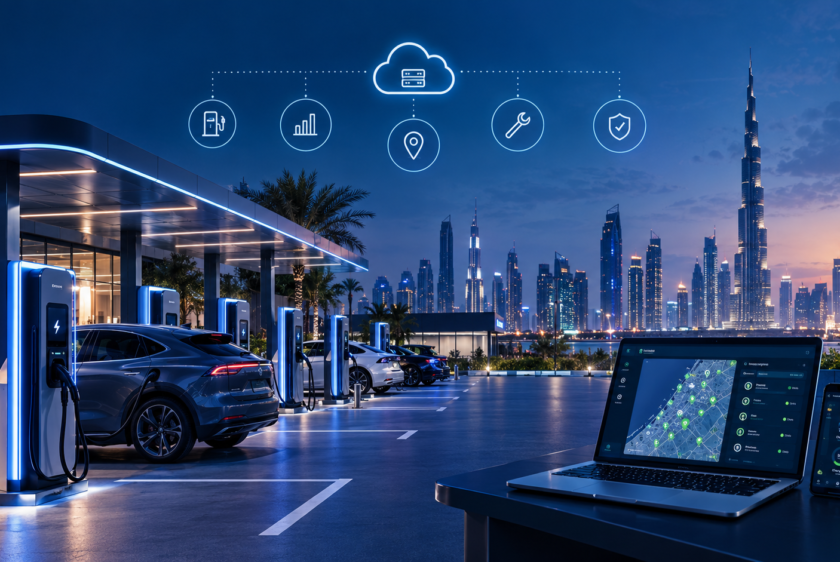
The rapid adoption of electric vehicles is transforming how businesses, property developers, fleet operators, and communities think about mobility and energy. As demand for reliable charging continues to increase, EV charging network management, Commercial EV charging solutions, and EV charging infrastructure UAE are becoming essential components of modern transportation infrastructure. A successful charging network requires much more than installing charging stations. It requires the right hardware, software, electrical planning, connectivity, monitoring, maintenance, and operational strategy to deliver a dependable charging experience for EV drivers.
1. Understanding the Importance of EV Charging Network Management
EV charging network management is the process of monitoring, operating, optimizing, and maintaining multiple EV charging stations through connected software and digital technologies. As charging networks expand across commercial properties, workplaces, parking facilities, fuel stations, residential communities, and public locations, effective management becomes increasingly important. Without proper EV charging network management, operators can find it difficult to identify charger issues, monitor utilization, manage charging sessions, track station performance, and maintain consistent service quality.
Modern EV charging networks are becoming intelligent infrastructure systems. Connected chargers can communicate with backend platforms, allowing operators to monitor station status and charging activity remotely. This is particularly important for organizations managing multiple charging points or locations.
Key elements of effective EV charging network management include:
- Real-time monitoring: Operators can monitor charger availability, charging sessions, connectivity, and operational status.
- Remote management: Connected charging systems can help operators identify issues and manage stations without being physically present at every location.
- Energy management: Smart charging can help businesses manage available electrical capacity and distribute charging loads efficiently.
- Performance monitoring: Network data can help operators understand utilization patterns and identify opportunities for optimization.
- Maintenance management: Operational data can help identify potential equipment issues and support faster troubleshooting.
- Scalability: A centralized approach makes it easier to manage additional chargers as the network grows.
- OCPP compatibility: Open communication standards can support interoperability between charging hardware and backend management platforms.
For Charge Point Operators, property managers, fleet operators, and commercial businesses, EV charging network management can therefore become a central part of maintaining reliable and scalable charging infrastructure.
2. Commercial EV Charging Solutions for Modern Businesses
Businesses are increasingly looking beyond traditional parking facilities and considering EV charging as part of their customer experience, employee benefits, sustainability initiatives, and long-term infrastructure strategy. Commercial EV charging solutions are designed to support locations where multiple vehicles may need access to charging throughout the day.
Shopping malls, hotels, airports, office buildings, commercial parking facilities, retail destinations, logistics locations, and other high-traffic properties can all have different charging requirements. A workplace may need AC charging for employees who remain parked for several hours, while a high-traffic commercial destination may benefit from faster DC charging for drivers who want to minimize waiting time.
The right Commercial EV charging solutions should be designed around the specific characteristics of each site rather than simply installing the highest-powered charger available.
Important considerations include:
- Property type: Different commercial environments have different parking patterns and charging requirements.
- Expected demand: Operators should estimate how many vehicles may use the chargers and when demand is likely to peak.
- Charging duration: Longer parking periods may suit AC charging, while short visits may require DC fast charging.
- Electrical capacity: The existing electrical infrastructure must be assessed before determining the appropriate charging configuration.
- Future expansion: Charging infrastructure should ideally allow additional chargers to be introduced as EV adoption grows.
- User accessibility: Chargers should be conveniently positioned and easy for drivers to access.
- Network connectivity: Connected charging stations can support monitoring and centralized EV charging network management.
Commercial charging can also create additional opportunities for businesses. A hotel can offer EV charging to guests, an office can support employee mobility, a shopping centre can improve convenience for customers, and a commercial parking operator can integrate charging into its broader parking strategy.
This makes Commercial EV charging solutions more than a charging facility. They can become an integrated part of a property’s services and customer experience.
3. Building Scalable EV Charging Infrastructure UAE
The growth of electric mobility is increasing the need for dependable EV charging infrastructure UAE. Building this infrastructure requires careful consideration of electrical systems, charger technology, location planning, connectivity, safety, maintenance, and future expansion.
A charging station should be viewed as one part of a larger infrastructure ecosystem. The charger itself is only one component. Behind every reliable charging point are electrical connections, protection systems, communications, software, network management, maintenance processes, and operational procedures.
For businesses developing EV charging infrastructure UAE, a structured approach can include:
- Site assessment: Analyze the property’s layout, parking spaces, traffic patterns, electrical supply, and installation requirements.
- Electrical planning: Determine available power capacity and evaluate the expected load created by the charging network.
- Technology selection: Choose AC chargers, DC fast chargers, or a combination depending on the site’s requirements.
- Infrastructure design: Plan charger locations, cabling, protection equipment, parking arrangements, and accessibility.
- Network integration: Connect compatible chargers with suitable backend platforms for monitoring and management.
- Installation: Complete the physical installation of charging equipment and supporting infrastructure.
- Commissioning: Test equipment, connectivity, charging functionality, and operational performance before deployment.
- Maintenance: Establish preventive maintenance and technical support processes to maintain long-term reliability.
- Expansion planning: Design infrastructure with future charger deployment and increasing EV demand in mind.
The UAE presents specific operating considerations for charging infrastructure. Outdoor charging equipment may need to operate in demanding environmental conditions, including high temperatures, dust, and humidity. Selecting appropriate equipment and implementing suitable installation and maintenance practices can therefore be an important part of developing dependable EV charging infrastructure UAE.
A scalable infrastructure strategy also helps organizations avoid treating every additional charger as a completely new project. Proper planning can make future expansion more straightforward and cost-effective.
4. How Smart Technology Improves EV Charging Network Management
Technology is changing the way EV charging networks are operated. Traditional charging infrastructure requires users and technicians to interact with individual charging stations. Connected systems can provide centralized visibility across multiple chargers, allowing operators to manage charging infrastructure more efficiently.
This is where EV charging network management becomes particularly valuable. A centralized management platform can provide information about station availability, charging sessions, energy consumption, network connectivity, and operational status. For organizations managing multiple locations, this visibility can simplify daily operations.
Smart charging technology can support several important functions:
- Live charger monitoring: Operators can see whether individual stations are available, occupied, charging, or experiencing an issue.
- Session management: Charging activity can be monitored and managed through connected systems.
- Load balancing: Smart charging strategies can help distribute available electrical capacity across multiple charging points.
- Data visibility: Operators can use charging data to understand utilization and identify demand patterns.
- Remote diagnostics: Network connectivity can help technical teams identify certain issues without immediately visiting the site.
- Centralized operations: Multiple charging locations can potentially be managed through a unified system.
- OCPP integration: Open communication protocols can support communication between compatible charging hardware and management platforms.
Effective EV charging network management also helps businesses move from reactive operations to a more structured approach. Instead of waiting for a customer to report a charger problem, operators can use network information to identify potential issues and coordinate maintenance.
As the number of charging stations increases, this centralized approach becomes increasingly important. Managing two chargers manually may be relatively simple, but managing dozens or hundreds across different sites requires better visibility, automation, and operational processes.
5. Combining EV Charging Infrastructure UAE With Reliable Operations and Maintenance
Installing chargers is only the beginning of a successful EV charging project. Long-term performance depends on regular monitoring, preventive maintenance, technical support, spare parts availability, software management, and timely troubleshooting. This is why operational planning should be included from the beginning when developing EV charging infrastructure UAE.
A charging network that frequently experiences unavailable stations can create frustration for EV drivers and reduce confidence in the charging service. Businesses therefore need to consider the entire lifecycle of their charging infrastructure.
A comprehensive operational strategy can include:
- Preventive maintenance: Regular inspections can help identify equipment problems before they become major operational issues.
- Technical support: Access to qualified technical assistance can help reduce downtime and resolve issues more efficiently.
- Spare parts management: Maintaining access to suitable replacement components can support faster repairs.
- Software monitoring: Connected platforms can provide visibility into station performance and network status.
- On-site commissioning: Proper testing and configuration can help ensure that charging equipment is ready for operational use.
- Performance optimization: Charging data can help businesses identify underutilized or high-demand locations.
- Equipment upgrades: Infrastructure can be reviewed periodically to determine whether new charging technologies can improve performance.
- User experience monitoring: Operators can consider charger availability, accessibility, reliability, and ease of use when evaluating network performance.
For commercial operators, maintenance is particularly important because charging availability can directly affect the experience of customers, employees, fleet drivers, and visitors.
A strong EV charging network management strategy can connect monitoring, maintenance, technical support, and operational decision-making into one coordinated process. This creates a more structured approach to managing charging infrastructure throughout its lifecycle.
6. Preparing for the Future of Commercial EV Charging Solutions in the UAE
The future of electric mobility will require charging infrastructure that can adapt to changing vehicle technology, increasing EV adoption, evolving customer expectations, and growing demand for convenient charging. Organizations investing in Commercial EV charging solutions and EV charging infrastructure UAE should therefore think beyond immediate installation requirements.
Future-ready charging infrastructure should combine reliable hardware with intelligent network management, flexible software, professional installation, ongoing maintenance, and the ability to scale.
Businesses can prepare for future requirements by focusing on:
- Scalable infrastructure: Design charging systems that can accommodate additional charging points as demand increases.
- Smart network management: Use connected technology to monitor and operate charging infrastructure efficiently.
- Flexible charging options: Combine AC and DC charging according to the requirements of different users and locations.
- Data-driven decisions: Use network and utilization data to understand how charging infrastructure is being used.
- Reliable maintenance: Establish long-term maintenance and technical support processes.
- Interoperability: Consider technologies and communication standards that can support flexible network integration.
- User-focused design: Make charging accessible, understandable, convenient, and reliable for EV drivers.
- Business integration: Treat charging as part of the wider property, mobility, energy, or fleet strategy.
The future of Commercial EV charging solutions is not simply about installing more chargers. It is about creating connected charging ecosystems that can operate reliably and evolve over time. Effective EV charging network management can provide the visibility and control needed to support those ecosystems, while carefully planned EV charging infrastructure UAE can provide the physical foundation.
For organizations across the UAE, the right charging strategy depends on the type of property, expected vehicle demand, electrical capacity, charging requirements, operational objectives, and future expansion plans. A carefully planned combination of charging hardware, software, installation, network management, maintenance, and technical support can create a more dependable EV charging experience.
Newmont Energy’s charging solutions cover applications including Charge Point Operators, gas stations, workplaces, commercial locations, and residential environments, with services and technologies designed to support charging operations and ongoing infrastructure requirements.
As electric mobility continues to develop, businesses that plan their charging infrastructure as a complete ecosystem can be better prepared for changing demand. From EV charging network management to Commercial EV charging solutions and scalable EV charging infrastructure UAE, every element plays a role in creating reliable, connected, and future-ready charging networks.